
Energy strategy in 2026 is defined by uncertainty, opportunity, and the accelerating shift toward onsite and distributed resources. The past two years have shown that both the grid and the energy markets are far more volatile than most owners, developers, and operators expected. Utility rate adjustments are coming faster, outage events are increasing in frequency and duration, and many regions are running into structural generation and transmission shortfalls. This volatility affects both sides of the real estate and industrial landscape: existing portfolios struggle to maintain predictable operating expenses and resiliency, while new developments face growing risks to entitlements, schedules, and long-term planning.
Across the broader market, the pressure is mounting. Industrial load growth from AI, cold storage, EV fleets, and automated logistics is accelerating just as interconnection queues stretch from months into years. Developers who could once rely on the grid to absorb new demand are now facing hard constraints—transformer shortages, substation capacity limits, multi-year utility studies, and outages that threaten inventory, labor continuity, and tenant operations. Resiliency is no longer a luxury; it is rapidly becoming a financial metric, tied directly to avoided downtime and operational continuity. This market environment has made onsite generation—especially dispatchable resources—critical to maintaining development certainty and portfolio performance.
Despite the turbulence, the incentive landscape remains highly valuable. Many of the most important technologies—battery storage, linear generators, and fuel cells—still qualify for the Investment Tax Credit (ITC), giving owners a substantial opportunity to capture value even as policy evolves. Solar eligibility remains in flux under new federal rulemaking, but while final guidance is pending, there is still meaningful time to secure ITC benefits for solar projects that can be placed in service within the relevant windows. Incentives for non-solar technologies continue to be significant, but they come with their own layers of regulatory complexity. Understanding eligibility, domestic content implications, prevailing wage rules, and the nuances of new guidance now requires specialized expertise. This is no longer a space where generalist developers or overstretched internal teams can navigate incentives confidently.
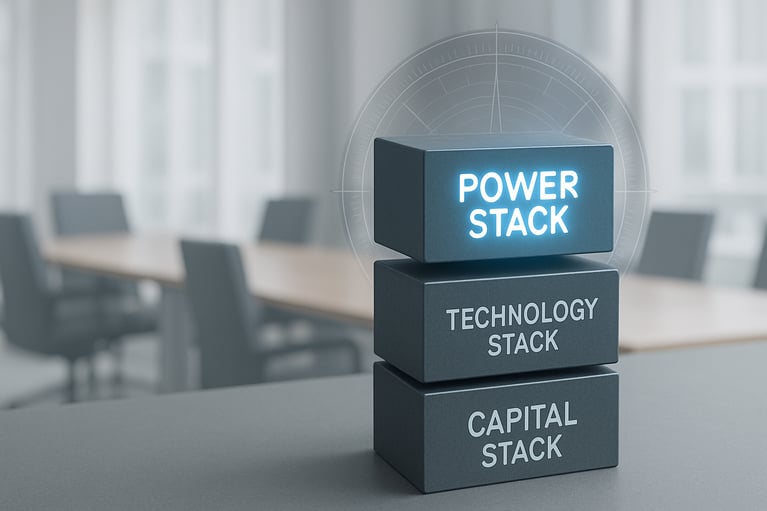
For most portfolio owners and developers, the challenge isn’t deciding whether to invest in onsite energy—the economics and market pressures make that decision unavoidable. The challenge is knowing how to plan, sequence, and structure these systems so that they reduce risk rather than add to it. This is where a new strategic framework becomes critical: understanding not just the capital stack and the technology stack, but your Power Stack. In an environment where energy determines whether a development moves forward—or whether an existing facility remains competitive—owners must build power strategy into the same early planning phases normally reserved for financing, entitlements, and digital infrastructure. The Power Stack is the combination of technologies, tariffs, incentives, resiliency requirements, and operational constraints that determine how well a facility will perform in the real world. And in 2026, optimizing that stack is no longer optional.
Energy strategy also has direct implications for real estate value. For new development, access to reliable and affordable power can determine site selection, drive entitlement feasibility, and influence construction phasing. For existing portfolios, volatile tariffs and increasing outage risks affect tenant retention, rent growth, operating expenses, and even cap rates. Investors are paying more attention to the alignment between a facility’s power profile and its long-term revenue profile. As demand patterns shift and grid constraints worsen, energy positioning will become a central component of asset performance across industrial, cold storage, logistics, controlled-environment agriculture, and data-heavy operations.
PowerStack’s role is to bring clarity to this complexity. We are technology-agnostic, incentive-aware, and focused on practical outcomes: reliable power at predictable cost. Our team models multiple ITC scenarios, evaluates dispatchable generation options, forecasts tariff risk, and incorporates interconnection strategy into early design. We analyze resiliency requirements, grid constraints, and operational realities to determine the right combination of solar, storage, fuel cells, linear generators, or hybrid configurations. We also stay aligned with the evolving incentive landscape—tracking guidance, modeling eligibility pathways, and designing projects to protect ITC value regardless of regulatory adjustments. PowerStack functions as the specialized partner who understands the full energy picture so owners don’t have to navigate it alone.
Looking ahead to the rest of 2026, the message for owners and developers is clear: start energy planning earlier, treat onsite power as a core component of project success, and engage experts who understand both the market landscape and the incentive framework. Begin evaluating dispatchable resources upfront rather than as an afterthought. Preserve ITC eligibility through proper sequencing and documentation. And for new developments, treat power availability with the same priority as land acquisition, zoning, and financing. The companies who move early will reduce risk, capture incentives, and protect project schedules at a time when energy is shaping the competitive landscape more than ever.
The grid may be volatile, but your energy strategy doesn’t have to be. PowerStack is built to help you navigate the transition—simplifying complexity, unlocking incentives, and delivering reliable power in a market where certainty is increasingly rare.